
Commentary
The Ciri Papers | First Thoughts on The Witcher 4 & CDPR’s New Trilogy
Three meditations on Ciri in The Witcher 4: from trauma's narrative potential to bodily autonomy, exploring how CDPR's vision aligns with A. Sapkowski's character.
I write, read, and walk the bogs. I have thought too much about The Witcher. I am interested in the evolution of ideas and I like creating things. Let's talk!

Commentary
Three meditations on Ciri in The Witcher 4: from trauma's narrative potential to bodily autonomy, exploring how CDPR's vision aligns with A. Sapkowski's character.
Article
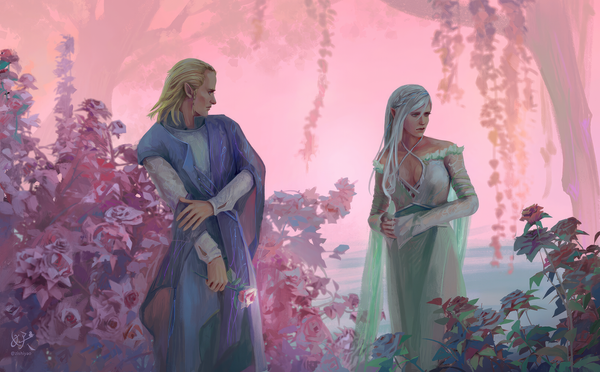
In The Witcher, elven women get the chance to have children only a handful of times. But when human colonizers arrive, biology becomes destiny. In Tolkien, elves control their fertility through divine will. In Sapkowski, fertility controls the elves through inconvenient timing.
Character Study
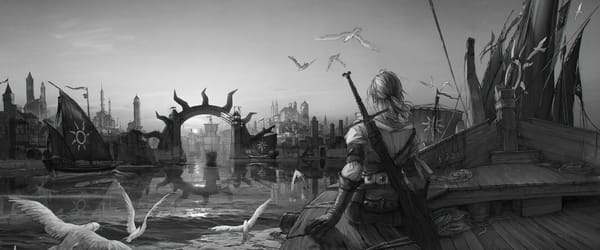
The Witcher often presents us with shadow doubles – like Auberon Muircetach & Emhyr var Emreis. Both pursue the greater good at the expense of decency & their own (un)humanity. A greater good to be achieved by begetting a prophesised child through incest with Cirilla, their descendant.
Article
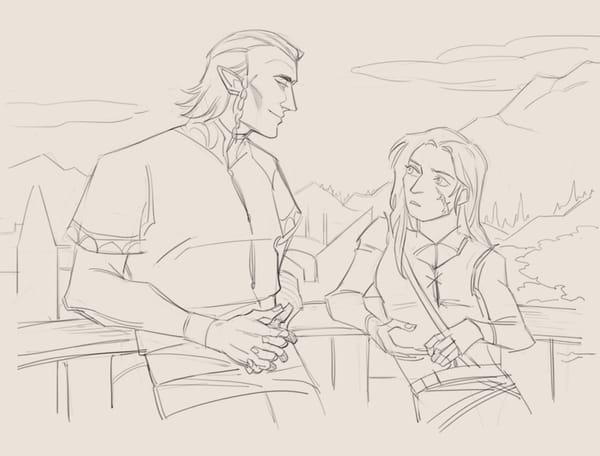
The Witcher’s plot is based on a universally known fairy tale, where a monster (or a wizard) saves someone’s life and asks for something in return. The Law of Surprise. In its frustration and desperation, Ciri’s offer to Avallac’h comes off as a perversion of the way Ciri first chooses Geralt.
Article
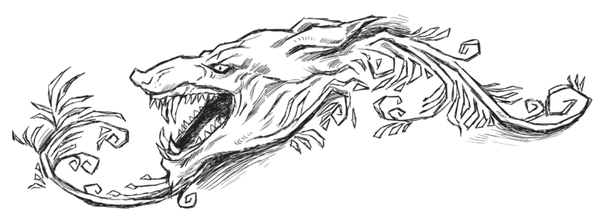
'The vast majority of people who claim that rape and violence are disgusting and morally unacceptable to them are simply unable to use violence.' But what of witchers: created as tools of violence by the powerful, yet cast out by the society?
Review
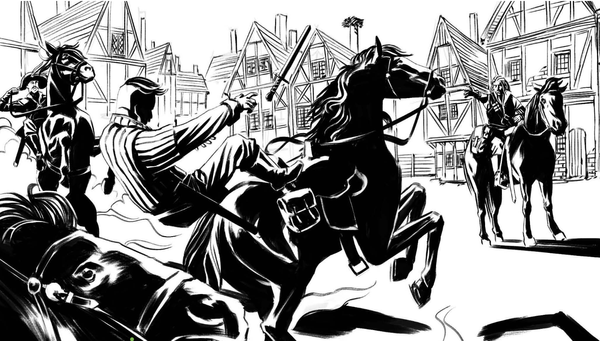
We live (on) in our successors. In them, our sins live on too. In A. Sapkowski's new Crossroads of Ravens, Geralt learns his profession and internalizes witchers’ generational trauma. Witchers have absent mothers and distant fathers who'd love to vivisect them.