The Witcher 4 | Writing Ciri After Geralt: An Emotional Witcher?
CD Projekt Red's writers say Ciri is a different person from Geralt; more emotional. What would this mean for The Witcher 4? Because Ciri may be more emotionally expressive than Geralt, but she is not more emotionally transparent.

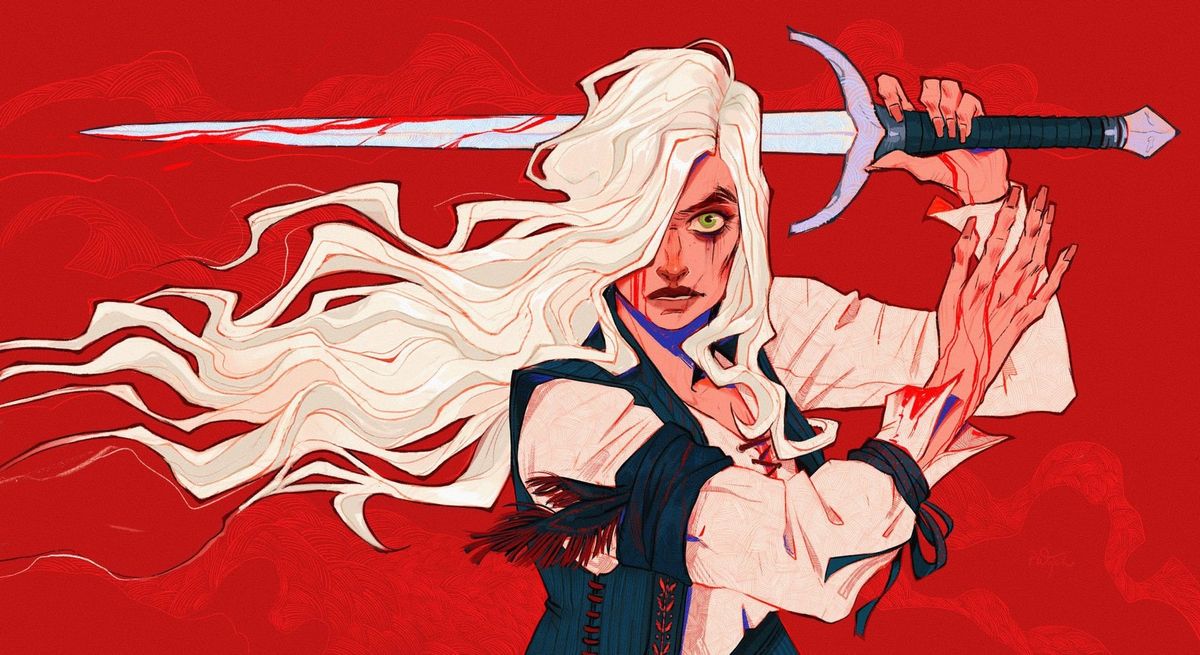
Some thoughts regarding the recent interview and presentation with Marcin Blacha and Philipp Weber at G-Con, about moving from Geralt to Ciri in The Witcher games.
Things happen to Ciri and, sometimes unknowingly, she becomes the cause of shifts in other characters, as well as the world at large. She is the pebble in the gears of the Plot, reaching for control. Ciri’s life is full of desperate attachments, impulsive decisions and self-destructive behaviours, as well as compromises and (!) dangerously thrilling discoveries of her own power over others. Because of her abandonment trauma, though not only that, moral dilemmas are never abstract for her, and Ciri’s loyalty is wont to go to people over principles. For a character who also feels righteous very easily, this may pose a recurring problem: what constitutes an acceptable betrayal (of self or others) in the face of the risk of losing somebody she cares for? The player may have to try and understand Ciri’s viewpoint and why she might want things that seem plainly bad, or that Geralt would never go for.
Reassuring as it is that Blacha emphasises Ciri’s difference from Geralt, I’m hoping Ciri’s hot-headedness won’t become a caricature. She may be more emotionally expressive, but she is not more emotionally transparent. Ciri’s various selves – the princess, the frightened child, the cut-throat, the avenger, the witcher girl, the woman who wants to be loved and never left again, the mythic figure of unimaginable power and loneliness – do not hang together neatly, and Ciri could be very interesting to write because she herself does not often immediately understand her own motivations and wants. For example, she may think she is acting self-sufficiently when she actually craves recognition and validation. Or she might mistake being needed for being loved, looking to ensure she is needed when actually wanting to be proven she is loved. Being deemed indispensable is, after all, how she has come to experience other people’s interest in her. Even her childhood exclamation, ‘Am I your destiny? Say it!’, betrays a longing for a bond that cannot be broken. But Geralt’s answer is what Ciri, the person, actually needs: ‘You are much more than that’, i.e. you are loved beyond your necessity.
With CD Projekt’s attention on relationships between characters, I am very curious, for example, about how Ciri might behave when she becomes the more powerful party in any of her relationships. Would she recognise another person’s needs, including insecure ones, as part of loving her or would she interpret these needs as another attempt to control her? Conversely, could she become possessive or clingy herself? Would she test their devotion? Might she misread actions and punish people for failings she only fears they might yet commit toward her? Additionally, Ciri’s desire for autonomy and freedom may itself conflict with her wish to belong and matter. As a woman who has always had to escape and claw back control, her default response is to resist being possessed and defined, and yet it is an exhausting way to live. Is there rest anywhere, or just an eternal flight? How to inhabit a story without fleeing and without fearing the loss of herself?
Repeatedly, Ciri is forced into situations in which she has to conceal her intentions while making sense of others’ vulnerabilities; to potentially use to her advantage after biding her time. This can backfire: assuming the worst of people closes off reconciliatory moves, cooperation and understanding. Given how protective of Ciri the players are likely to be, this can lead to spectacularly unexpected outcomes down the line (as per their ‘delayed consequences’ principle), even if we assumed at the time that we were doing the right thing for (and as) Ciri. Weber says Ciri may act more harshly in some situations and, indeed, Ciri can be disturbingly comfortable with violence, especially when she feels justified in inflicting it. And yet she is also capable of great compassion, having been hurt herself and knowing how pain, bitterness, pride, and loneliness can make people act.
Through Ciri, I would love to see us struggling with our worst nature. She is a woman who has had evil happen to her. So we may see how complicated, and yet cathartic and rewarding, it can be to go on living while taming the crooked tree that has shot up as a result. By temperament, Ciri is haughty and sharp-tongued, though also protective and righteous, and when hurt, she can become vengeful and cruel – she keeps losing goodness before re-building it. Troublingly, cruelty can feel very good when it seems justified, and exercising power can feel like the restoration of something that was taken from you unfairly. A question I would like to see staged, then, is that of the eternal choice – to be good or evil? What does the act of trying, failing, succeeding even mean here? Sapkowski conceived Ciri as ‘evil’ to Geralt’s ‘good’. ‘She had gained a taste for the robbers' life. For though no one knew it then, there was fury and cruelty in that girl. The worst of everything that hides in a person emerged from her and slowly got the upper hand’ (BoF, ch 7). The lesson, though, if there was ever a lesson that had a shred of a chance of working for characters in The Witcher, was this: ‘You don’t have to kill your feelings. It’s enough to kill hatred within yourself.’ Hatred is so seductive, allowing a person in their pain and anger to smash a hole in the world, and to matter and not be alone with the pain any longer. Unpicking confusion, guilt, self-hatred, rage, and need, though, can be far scarier and more uncertain.
By the end of the books, Ciri ceases to walk the path of evil, not knowing yet what she will become. Good and Evil are in everyone. Nobody is inherently predestined for a cursed path and everyone has a choice. But curing might not look very pretty from the outside, and there’s no way to be perfect in it. Ciri judges herself harshly in the books; as does everyone else. Everyone has a Plot for Ciri and everyone has a preconception about what Ciri ought to act like, be it as the perfect saviour, woman, or victim. Canonically, not a single true image of Ciri survives. Her person and story are always somebody else’s fairy tale; including how she copes and develops. But who is to say how the correct path to healing looks like or ought to be depicted? Even if Ciri may make choices that disturb or confuse us, or contradict everything we believe she ought to have learned by now, that does not make them any less her choices. Ironic, indeed, if we would deny a survivor’s autonomy by denying her the possibility of exercising it badly.
This is fairly important, I think, because players who relate to Ciri’s trauma may get spooked when she chooses what they’d find deplorable or frightening in themselves. Le Guin has this wonderful quote though: ‘People who deny the existence of dragons are often eaten by dragons. From within.’ I am glad the writers are committed to writing difficult stories, because I think it’s unserious to write post-books Ciri as an uncomplicated symbol of emancipation. Having experienced coercion, exploitation, abandonment, Ciri has also learned to retaliate, manipulate, and rationalize her actions. I want to understand that and I want to feel it under my skin. She is unlikely to make wise decisions all the time about whom to trust, love, or how to deal with people. Survivors’ stories are rarely straightforward and Ciri is not a pedagogical fable, a morally exemplary heroine whose every choice must validate her personal growth. More fundamentally, I simply think that once a person no longer has to struggle under the guilt of healing perfectly, they can learn something real about what ‘good’ can look like.
I would like to see what happens when, after having for so long been the object of people’s desires, Ciri is free to confront what she wants. Because ‘In this world there are only two tragedies. One is not getting what one wants, and the other is getting it.’ Is there any guarantee that Ciri’s wishes will be wiser, kinder and less destructive than other people’s?
Links: